
Cooling Cities for a Net Zero Future
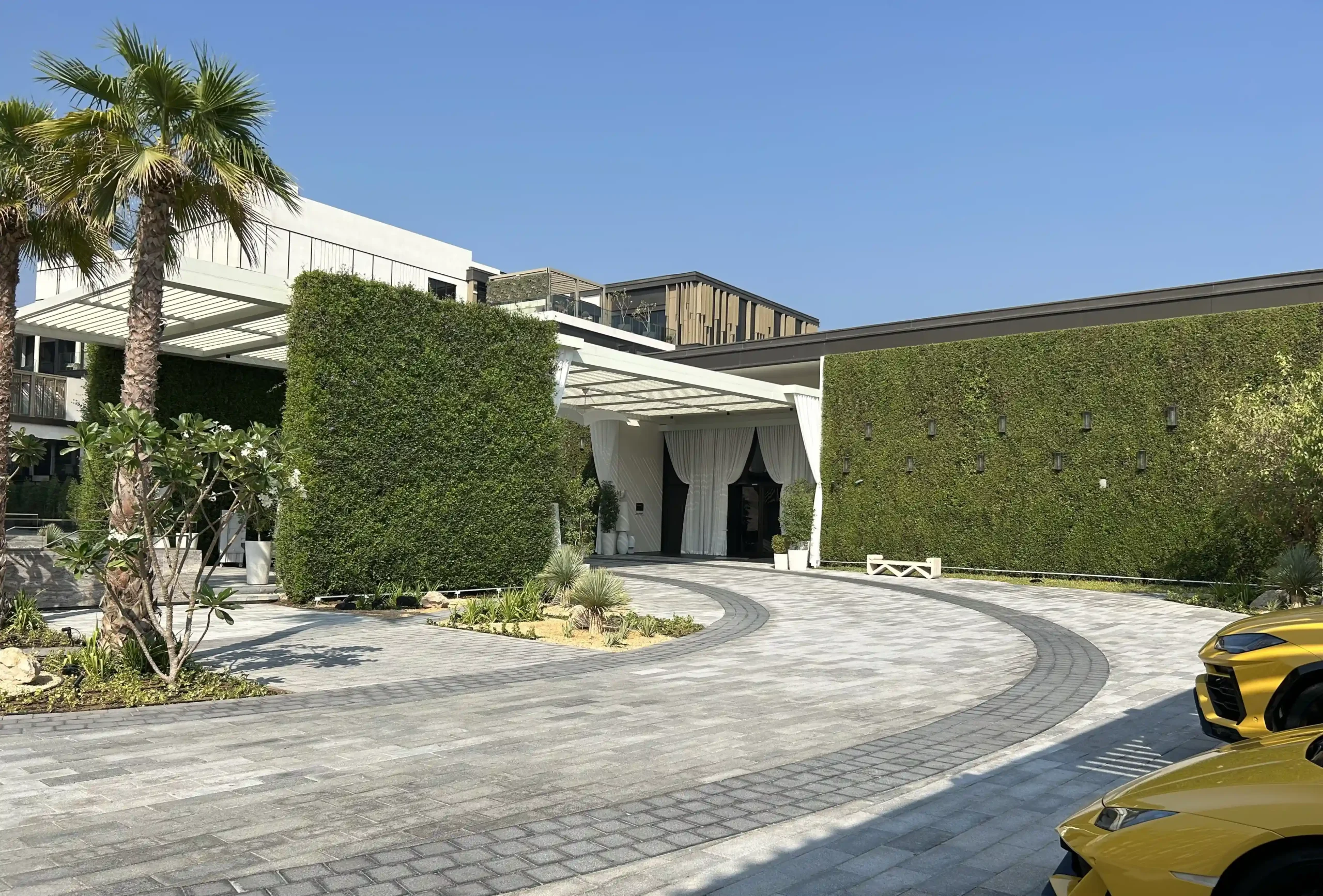
Across the Middle East, cities are growing faster—and hotter—than ever before. As urban centers expand vertically and densities increase, extreme heat is becoming one of the defining challenges of modern city-making.
From Saudi Arabia’s Vision 2030 to the UAE’s Net Zero 2050 commitment, governments across the region are advancing ambitious strategies to build cities that are sustainable, resilient, and globally competitive. Yet extreme heat threatens energy systems, public health, outdoor livability, and long-term climate goals.
Addressing urban heat is no longer a design consideration.
It is critical infrastructure.
Urban Heat and the Challenge Facing MENA Cities
Cities absorb heat. Concrete, glass, asphalt, and steel store solar radiation during the day and release it slowly at night—keeping urban temperatures elevated long after sunset. This phenomenon, known as the Urban Heat Island (UHI) effect, can raise temperatures in dense districts by several degrees compared to surrounding areas (Oke, 1982).
In the Middle East, where baseline temperatures are already extreme, the UHI effect compounds:
- Peak electricity demand and grid stress
- Cooling-related emissions
- Reduced outdoor comfort and walkability
- Increased heat-related health risks
For Vision 2030 and Net Zero cities, cooling the urban environment itself is now a strategic priority.
Living Walls as Climate Infrastructure
Living walls—when engineered as high-performance systems—directly address the drivers of urban heat while delivering additional environmental and human benefits. As intelligent smart living wall systems continue to evolve, their role as climate infrastructure becomes increasingly clear.
1. Urban Heat Reduction & Surface Cooling
Vegetation absorbs and deflects solar radiation before it reaches building surfaces. Thermal imaging studies consistently show that living façades operate at significantly lower surface temperatures than adjacent bare walls, reducing heat absorption during the day and heat release at night (Grant, 2012).
At scale, this contributes meaningfully to urban heat island mitigation.
2. Natural Insulation & Energy Efficiency
Research in warm and Mediterranean-analog climates shows that green façades can be up to 20°C cooler than exposed walls, acting as natural insulation and solar shading (Pérez et al., 2011).
In peak summer conditions, cooling energy demand reductions of up to 60–66% have been documented (Perini & Rosasco, 2013)—directly supporting Net Zero energy and emissions targets.
3. Evapotranspiration & Microclimate Cooling
Through evapotranspiration, plants release moisture into the air, creating a natural cooling effect that lowers surrounding temperatures (Bowler et al., 2010). This improves comfort in plazas, pedestrian corridors, and public spaces—key elements of livable, people-centered cities.
4. Air Quality & Heat Mitigation
Vegetation filters airborne pollutants and particulate matter, improving air quality while also reducing heat retention caused by polluted urban air (Nowak et al., 2006). Cleaner air supports healthier populations and more resilient cities.
Aligning Living Walls With MENA Sustainability Frameworks
Living walls directly support—and can be credited within—regional planning and sustainability frameworks, including:
Saudi Arabia
Vision 2030 | Mostadam | Saudi Green Initiative
- Urban cooling and climate adaptation
- Reduced operational energy demand
- Improved wellbeing and public health
- Measurable environmental performance aligned with national KPIs
United Arab Emirates
Net Zero 2050 | Estidama Pearl Rating | Sa’fat Dubai Green Building Regulations
- Lower cooling loads and peak energy demand
- Improved outdoor thermal comfort
- Enhanced air quality and indoor environmental performance
- Data-backed sustainability compliance
Global Alignment
LEED | BREEAM | ESG & Climate Disclosure Frameworks
- Quantifiable environmental and energy performance
- Verified contributions to emissions reduction and wellbeing
- Support for investor and public transparency
Living walls offer something increasingly essential: visible, functional, and reportable sustainability.
From Green Design to Smart-City Infrastructure
What sets next-generation living walls apart—particularly in the Middle East—is their ability to perform as data-enabled urban systems, not just green design features.
SageGreenLife Biotile® Living Wall systems are purpose-built for extreme climates and deployed in environments such as Dubai. The platform integrates:
- Modular hydroponic living wall construction
- Smart irrigation and fertigation optimized for water efficiency
- IoT-enabled monitoring of plant health and system performance
- Environmental sensors tracking temperature, humidity, and air quality
- Cloud-connected dashboards for ESG and climate reporting
Living walls become active infrastructure—cooling buildings, improving air quality, and generating data. To learn about the measurable outcomes this technology delivers across real-world projects, explore how our interior and exterior living walls are redefining iconic architecture in smart cities.
How Governments Benefit From Living Wall Data
For governments and city authorities, data transforms living walls from a sustainability feature into a strategic asset.
1. Measurable ESG & Climate Reporting
Living walls generate real-time performance data that can be used to:
- Quantify urban cooling impact
- Track energy demand reduction
- Support ESG disclosures and sustainability reporting
- Demonstrate progress toward Vision 2030 and Net Zero commitments
2. Smarter Urban Planning
Aggregated data across districts enables planners to:
- Identify heat hotspots and cooling effectiveness
- Optimize placement of green infrastructure
- Inform façade guidelines and future developments
3. Climate Resilience & Adaptation
Data-driven insights support:
- Heat-resilience planning
- Extreme temperature response strategies
- Long-term climate adaptation modeling
4. Transparency & Global Leadership
Verified performance data allows cities to:
- Demonstrate accountability to citizens and investors
- Strengthen global sustainability leadership
- Move from aspirational targets to measurable outcomes
Nature as Infrastructure for Vision 2030 Cities
The future of Middle Eastern cities will be shaped by their ability to thrive under heat, density, and climate pressure—while still delivering identity, livability, and economic value.
Living walls represent a fundamental shift:
- From static façades to urban cooling systems
- From symbolic greenery to measurable performance
- From isolated projects to scalable climate infrastructure
The longevity and durability of this approach is already proven—see how a SageGreenLife living wall has thrived for over eight years in Chicago, demonstrating that living infrastructure endures when properly engineered.
For Vision 2030 and Net Zero cities, living architecture is no longer optional.
It is foundational infrastructure for a resilient, intelligent future.
Beyond climate performance, living walls also deliver measurable human benefits. Research confirms their ability to reduce stress, boost productivity, and enhance occupant satisfaction—explore how living walls create spaces where people thrive.
Ready to Bring Living Infrastructure to Your City?
Whether you’re planning a Vision 2030 development, a net-zero commercial district, or a landmark project in the Gulf region, SageGreenLife® can help you integrate smart living walls as measurable climate infrastructure—built for extreme conditions and long-term performance.
Request a Quote · Contact Us · Explore SmartWalls®
Let’s build living intelligence—where cities cool, perform, and endure.